The LEGO Engage Toolkit Training Workshop: Reflections from an Emerging Evaluator
25 Sep 2026
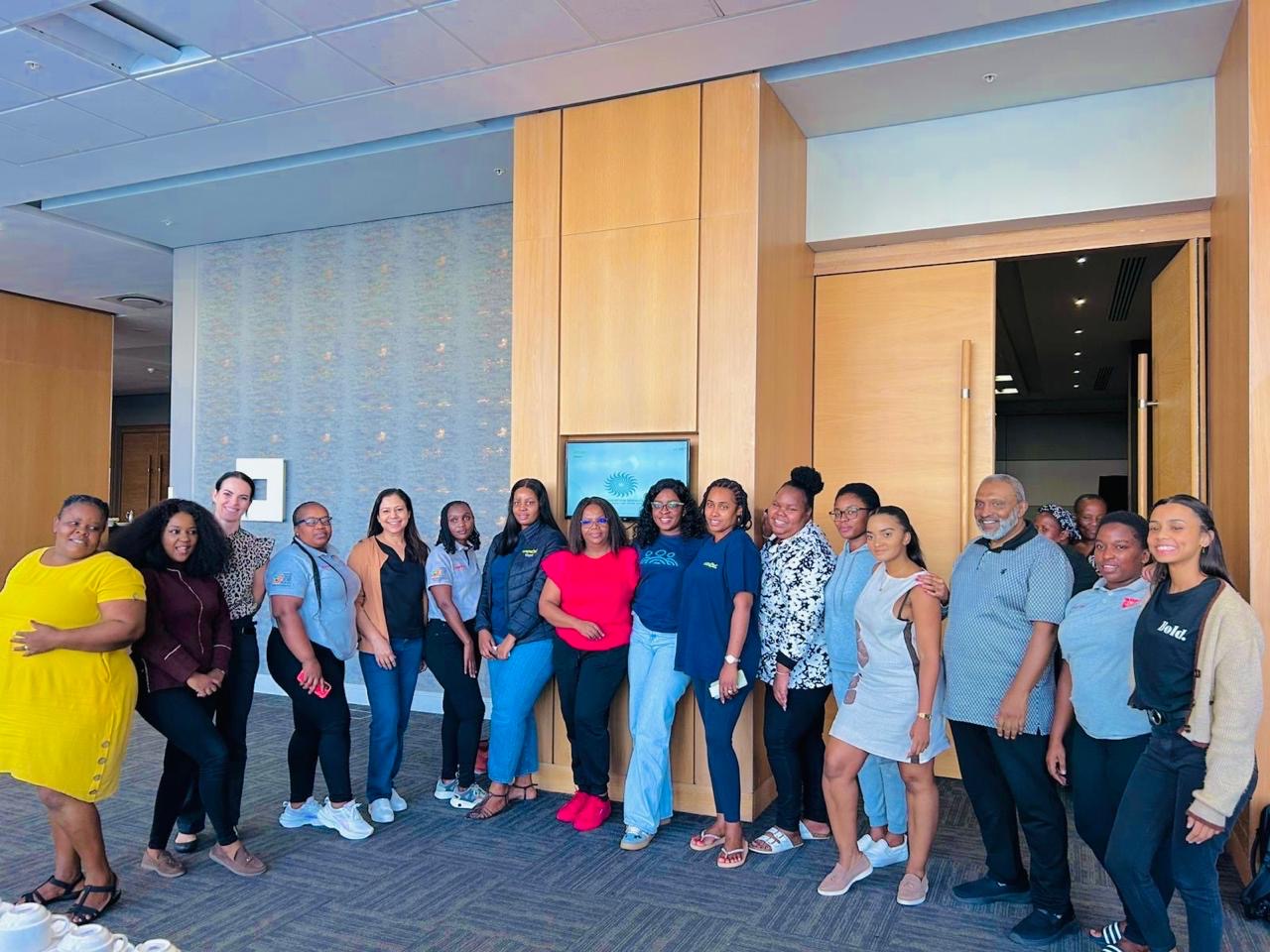
I had the opportunity to attend the week-long LEGO Engage Toolkit Training Workshop, hosted by JET Education Services in Durban. The workshop was centered expecting around the LEGO Foundation’s Engage Toolkit, an Early Childhood Development (ECD) tool that assesses the quality of adult-child interactions and how these support children’s engagement and learning through play.
While the workshop gave me a clearer understanding of the Toolkit and how it can be used in practice, my biggest takeaway was how the words that we choose as evaluators can shape whether evaluation becomes a tool for judgement or a tool that fosters growth.
What’s in the word ‘emerging’ in assessment?
The use of ‘emerging’ in the Toolkit’s assessment rubric is a powerful example of this. When adult-child interactions are assessed, the rubric avoids using discouraging or deficit-focused language when a practice is not entirely demonstrated. Instead, it describes the practice as emerging, shifting the focus from what is lacking to what can still be developed. This strengths-based approach is incredibly beneficial for stakeholders such as teachers and field workers from the NGO / NPO sector. For ECD practitioners, it creates an opportunity to reflect on their current practices and identify areas for further development. For field workers, it makes conversations surrounding feedback much more open and constructive.
Putting it into practice
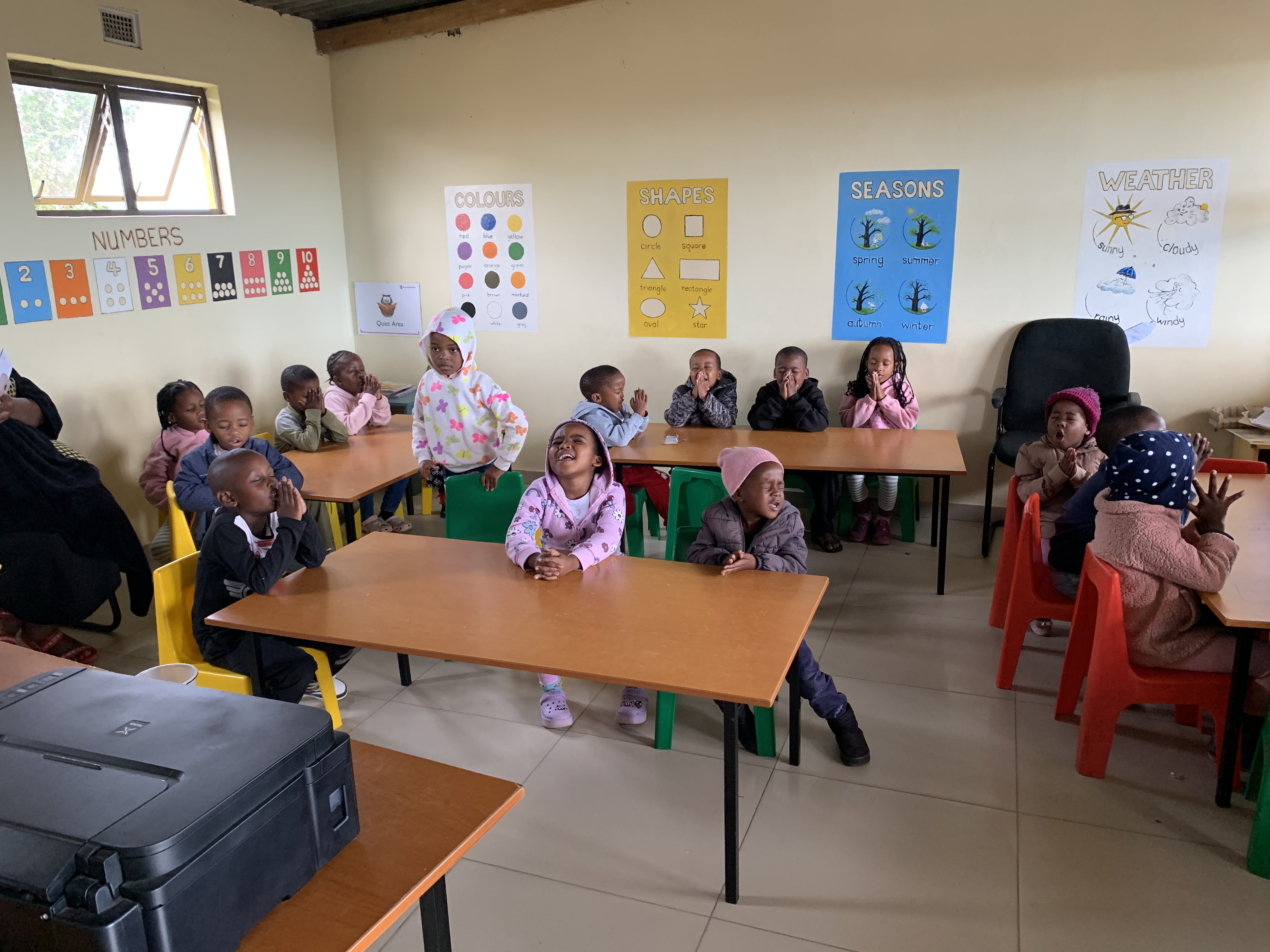
I then had the opportunity to put what I had learnt into practice at Rehoboth Creche and Preschool, a bright and welcoming public school catering for children from infancy to six years.
In the Grade R classroom, I observed Mrs Ndizimbomvu and her lively learners as I used The Engage Toolkit to assess the quality of adult-child interactions. Before beginning the observation, I briefly explained the purpose of the Toolkit, framing it as an opportunity to highlight the strengths in her current practice and to support her in cultivating a more positive emotional climate for her learners. How I explained the assessment’s purpose was important, Mrs Ndizimbomvu was reassured that I wasn’t there to find fault in her practice and she was receptive to the process and the feedback that followed.
What I learnt: The power of words in evaluation
By the end of the week, I was reminded of the responsibility we have as evaluators to consider not only what we measure, but how we communicate our findings through the words we choose.
The word ‘emerging’ also felt particularly personal to me as an Emerging Evaluator from SAMEA. I am still finding my feet in this area, and I appreciate that the term highlights my potential rather than my shortcomings, reminding me that I am truly growing into the evaluator I’ve always wanted to be.
As I continue to grow in my chosen area of work, I aim to approach monitoring, evaluation and learning (MEL) field as a process that supports growth rather than punishes. I also hope to carry this principle beyond my work in MEL, whether I am giving feedback to a colleague, a friend or family member, by being more intentional about the language I use.
Acknowledgements
A special thank you to JET Education Services for facilitating the LEGO Engage Toolkit Training Workshop, and to the staff and learners at Rehoboth Creche and Preschool for welcoming me into their wonderful school. I would also like to thank the DO MORE FOUNDATION and SAMEA for their continued support and for providing Emerging Evaluators like me with countless opportunities to learn, grow and contribute to the MEL community.